Leaks Located at the Source, Not Just Sealed Over
Roof leak repair in Decatur for residential and commercial properties with active leaks, hail damage, or fastener failure
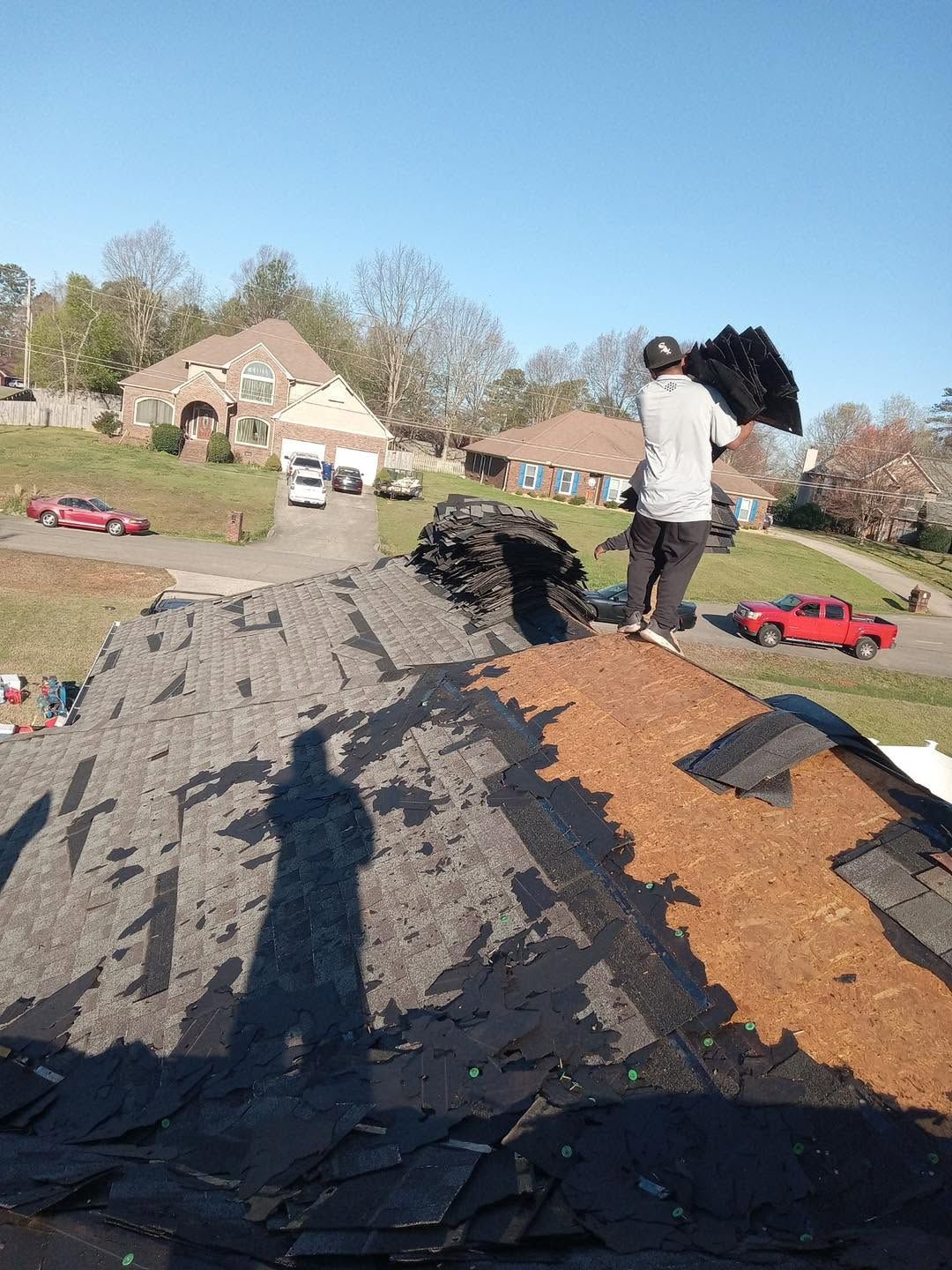
Hail damage and wind-driven water are among the most common causes of roof failure on residential properties in Decatur and Morgan County—and both produce damage that is frequently invisible from the ground. Adhesive failure around nail heads and fastener wear on exposed-fastener metal panels do not present as obvious surface breaks, yet both allow water to enter at specific penetration points and travel along the decking before showing up inside the structure. Rodriguez Roofing & Remodeling LLC identifies these failure points by inspecting from above and from the attic when accessible, following the water trail back to its actual source rather than addressing only what is visible on the ceiling.
The diagnostic process involves looking at the roof surface for hail impact patterns on shingles, checking the adhesive strip condition around nail penetrations, and examining attic wood for water trails that indicate the travel path. On metal roofing with exposed fasteners, worn or loosened screws are a specific failure point at the drip edge and panel laps, where wind-driven water finds entry at gaps that widen as fasteners back out over time. When the source is confirmed, the repair addresses that specific condition—damaged material is replaced or sealed, worn fasteners on metal panels are swapped out as part of the repair scope.
To get a roof leak diagnosed and repaired, call Rodriguez Roofing & Remodeling LLC at 256-280-1510—24/7 emergency response is available for active leak situations.
Why Roof Repairs Fail and How to Avoid It
The most common reason a roof repair fails within a short period is that the repair addressed the interior symptom—the wet ceiling, the stain, the drip—without locating the actual penetration point on the roof surface. Water entering through a compromised nail seal or a worn fastener can travel several feet laterally along decking before dropping through a ceiling, which means the interior damage and the roof entry point may not be directly above each other. Rodriguez Roofing & Remodeling LLC uses the water trail on the attic framing as a diagnostic guide that leads from interior evidence back to the roof penetration, which is where the repair is made.
After a correctly located repair, the immediate observable change is that the interior water entry stops. Over the next several rain events, the previously stained areas should remain dry, and no new staining should appear adjacent to the original location. If interior staining spreads or a new drip point appears nearby, the original repair addressed only one of multiple entry points—a condition that the attic inspection is specifically designed to prevent by mapping the full extent of water travel before any repair is performed.
The repair price covers diagnosis and the repair itself. If the inspection identifies structural damage—soft decking, compromised framing, or widespread fastener failure across a metal panel field—that scope is quoted and reviewed separately before work proceeds. Licensed and insured, with 24/7 emergency response for situations where the roof is actively letting water in.
Answers About How Roof Repair Is Performed
These questions focus on the repair process, how leaks are located, and what distinguishes a repair that holds from one that fails again quickly. The answers reflect the conditions commonly found on residential and commercial roofing in Decatur and surrounding Morgan County.
How is the actual source of a roof leak identified rather than just the interior damage?
The attic inspection traces water trails on the wood framing and decking from the wet interior area upward and toward the roof surface. Water moves along framing members before dropping, so the entry point is typically uphill from where the interior damage appears—following the trail on the wood leads directly to the penetration point.
What does hail damage look like on shingles and why does it cause leaks?
Hail impact creates circular bruising or granule displacement on shingle surfaces; more critically, the impact can break the adhesive seal between shingle layers and loosen the material around fastener heads. Once that seal fails, wind-driven water gets under the shingle at the compromised area and reaches the nail penetration, which becomes the entry point.
Why do exposed-fastener metal roofs develop leaks around the drip edge?
Exposed fasteners are installed through the metal panel into the substrate below, with a rubber washer sealing the penetration. As panels expand and contract and fasteners back out incrementally, the washer seal loses compression and gaps open at the fastener. At the drip edge, wind-driven water finds these gaps and enters the structure horizontally rather than running off vertically.
What is included in the repair scope versus what gets quoted separately?
The diagnosis and the repair of the identified failure point—shingle replacement, adhesive resealing, fastener replacement on metal panels—are within the repair scope. Structural damage found during inspection, such as soft or rotten decking beneath the failed area, is a separate condition that is quoted and reviewed with you before any additional work begins.
How do you confirm a roof repair has held after the work is done?
Check the attic after the next two or three significant rain events and look at the previously stained or wet areas of the decking and framing. Dry wood in those areas confirms the entry point was correctly identified and sealed. New staining in a different location nearby would indicate a second entry point that was not part of the original repair.
Rodriguez Roofing & Remodeling LLC also performs roof leak repair in Tanner, Flint City, Priceville, Hartselle, and Triana. To schedule a diagnosis or report an active leak, call 256-280-1510 at any hour.