New Roofing Built to the Structure It Covers
Roof installation in Decatur for residential and commercial properties requiring a complete new roofing system
A completed roof installation is only as reliable as the decisions made before the first sheet of material goes down—material selection, decking verification, and sequencing all affect how the system performs over its full service life. Rodriguez Roofing & Remodeling LLC installs new roofs on residential and commercial properties in Decatur and throughout Northern Alabama, with every project beginning at a site survey rather than a catalog. The survey establishes what roofing system is appropriate for the structure, not just what is available.
The installation sequence follows a defined order: decking is installed new or confirmed to be structurally sound, underlayment is laid before any finish material is applied, flashing is set at all transitions and penetrations, and then shingle or metal roofing goes on according to manufacturer specifications and applicable building codes. Each of these steps is dependent on the one before it—a sound decking layer is the prerequisite for everything above it, and flashing that is set incorrectly before roofing material is applied is nearly impossible to correct without a partial tear-off afterward. Any structural work identified during installation that falls outside the confirmed scope is quoted separately before it is performed.
To discuss material options and get a scope confirmed for your property, call Rodriguez Roofing & Remodeling LLC at 256-280-1510 to arrange a site survey.
What Proper Roof Installation Actually Requires
Material selection during the site survey is not cosmetic—it determines the attachment method, the underlayment type, and the flashing configuration that the entire installation is built around. Shingle systems and metal systems require different sequencing at valleys, different treatment at penetrations, and different fastener schedules. Getting that selection right at the beginning prevents the kind of mid-installation complications that result in delays or rework.
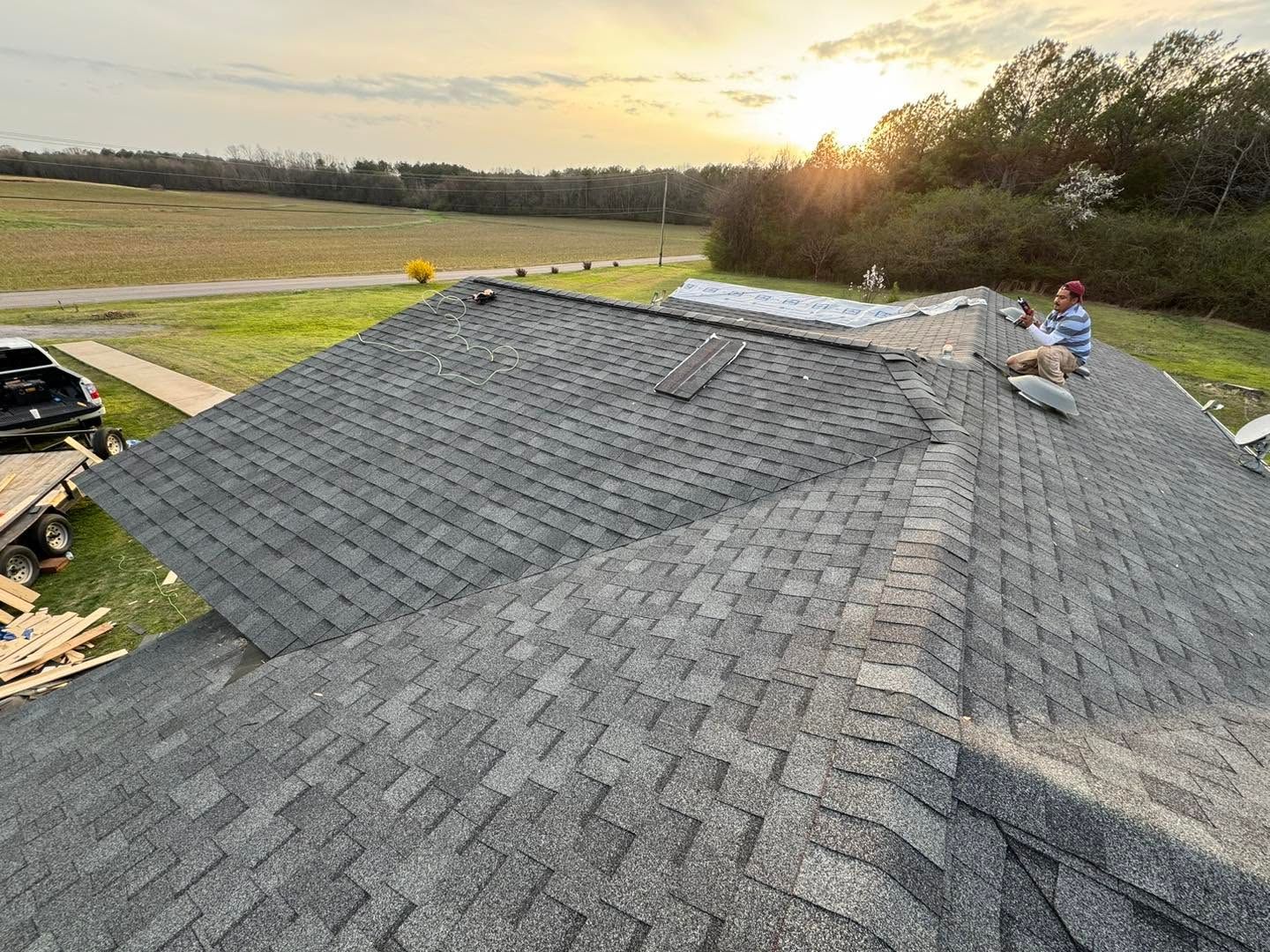
Once installation is complete, the visible result is a continuous, uniform roofing surface with no exposed fasteners at field areas, clean flashing lines at all transitions, and no gaps at the drip edge. From the attic side, properly installed decking and underlayment leave no visible daylight around penetrations. These are observable quality indicators that do not require specialized equipment to check—a flashlight in the attic and a walk of the exterior perimeter cover the basics.
Rodriguez Roofing & Remodeling LLC is family-owned and has operated in Northern Alabama since 2007, with 24/7 emergency roofing availability for situations that cannot wait for a scheduled appointment. The installation price covers materials and labor for the confirmed scope; the quote is specific to your structure and the roofing system selected, not a generic per-square estimate.
Questions About How New Roof Installation Works
The questions below focus on the installation process itself—what happens during the work, how decisions get made, and what a finished installation should look like for the residential and commercial property types common in the Decatur area.
What happens during the site survey before installation begins?
The survey establishes the condition of the existing decking or substrate, identifies any structural concerns that would affect the installation, and determines which roofing system—shingle or metal—is appropriate for the structure's pitch, load, and use. Material selection follows from that assessment, not the other way around.
How is new decking installed correctly before roofing material goes on?
Decking panels are fastened to the framing at specified intervals using ring-shank or screw-shank nails, depending on the application, and panel joints are staggered to prevent continuous seams that could create weak lines. Underlayment is applied over confirmed decking before any finish material is set down.
Why does flashing have to be installed before the roofing material rather than after?
Flashing at valleys, penetrations, and roof-to-wall transitions has to be integrated beneath the roofing material layers to direct water away from the structure. Installing it afterward means it sits on top of the surface rather than being woven into it, which leaves gaps that allow water to travel underneath.
What is the correct installation sequence for a shingle roof versus a metal roof?
Shingle systems require underlayment, starter course, field shingles, and ridge caps applied in that order, with flashing integrated at each transition point. Metal panel systems require confirmed decking, underlayment in most residential applications, panel installation with the correct fastener schedule, and sealing at all laps and penetrations before the roof is considered watertight.
How do you verify that a new roof installation is complete and correctly installed?
Check that all penetrations—vents, pipes, chimneys—have visible flashing that is sealed and integrated with the surrounding material. Verify that the drip edge runs continuous at eaves and rakes with no gaps. From inside the attic, no daylight should be visible around penetrations, and the underside of the decking should be uniformly dry.
Rodriguez Roofing & Remodeling LLC also installs new roofs in Tanner, Flint City, Priceville, Hartselle, and Triana. To get a site survey scheduled and a scope confirmed for your property, call 256-280-1510.