Bathroom Renovations That Address What's Actually Wrong
Bathroom remodeling in Decatur for spaces with moisture damage, poor ventilation, or fixtures past their useful life
Moisture damage shows up in older Northern Alabama bathrooms in predictable ways: soft subfloor material around the toilet base, tile grout that's darkened and separating, paint peeling at the ceiling line, and vanity cabinets with swollen drawer faces. These aren't cosmetic issues—they indicate that ventilation was inadequate when the space was built and that water has been working on structural surfaces for years. Rodriguez Roofing & Remodeling LLC addresses those underlying conditions as part of every bathroom remodel in Decatur, not as optional add-ons once the walls open up.
The remodeling sequence starts with fixture layout, tile selection, vanity style, lighting, and storage decisions, then moves into plumbing and electrical connections performed to current code, proper waterproofing behind tile, and surface finishes that hold up in a wet environment. Structural conditions like soft framing or mold are disclosed before work begins—not discovered mid-project and presented as unplanned costs.
Arrange an on-site evaluation to review your bathroom's current condition and identify which work needs to happen before new materials go in.
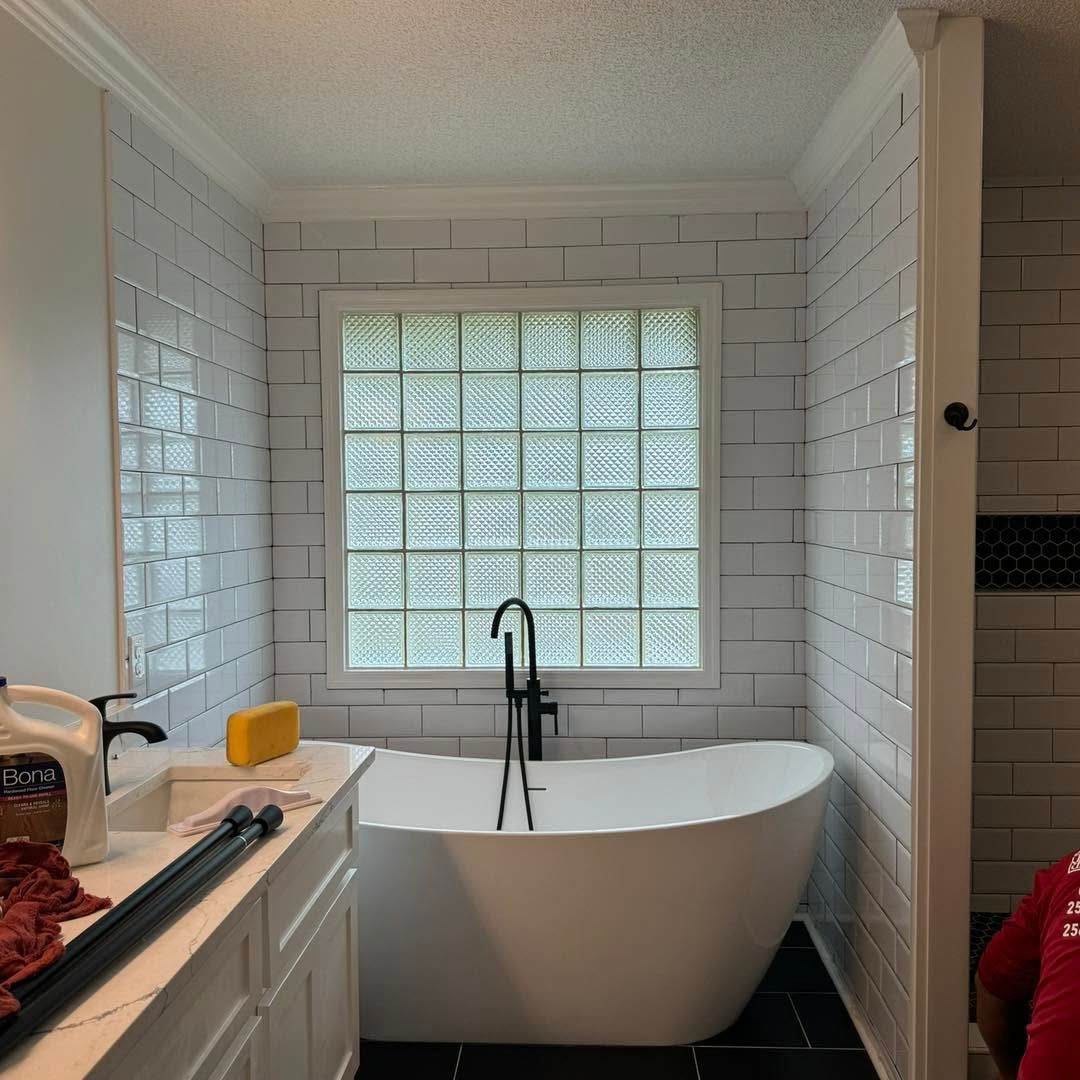
How Bathroom Remodeling Is Done Correctly
Tile installation in a bathroom is only as durable as the substrate beneath it. Before any tile is set, the backer surface must be waterproof-rated material—cement board or a membrane system—applied with the correct fastener spacing and taped seams. Rodriguez Roofing & Remodeling LLC follows that sequence on every tile installation, which is why the grout lines remain tight and the field tile doesn't shift or crack from substrate movement underneath. Plumbing and electrical connections are run to code during the same phase so the wall and floor surfaces close over a finished rough-in.
After a properly sequenced bathroom remodel, the visible changes are immediate: tile surfaces are flat and grouted cleanly, the vanity sits flush against the wall without gaps, fixtures operate without drips or wobble, and ventilation actually pulls air out of the room rather than recirculating it. The less visible change—waterproof substrate behind every wet surface—is what determines whether that condition holds in ten years.
Material lead times on vanities, tile, and specialty fixtures vary, and that timeline affects when each installation phase can begin. Planning the order of material selection early in the process prevents the situation where framing is ready but the vanity won't arrive for three weeks. Every client is informed of those lead times before demolition starts so the project schedule reflects actual delivery dates.
Answers About How the Bathroom Work Gets Done
Bathroom remodeling involves a sequence of trades—plumbing, electrical, tile, and finish work—that have to happen in the right order. These questions address how that process works and what to expect at each phase.
What waterproofing method is used behind shower tile?
A sheet membrane or liquid-applied waterproof membrane is installed over cement backer board before any tile is set, covering all seams and transitions so water cannot reach the framing even if grout cracks over time.
How does the plumbing rough-in affect the tile layout?
The drain location and supply line positions are confirmed before tile layout is planned, because the field tile pattern and any linear drain positioning must work around fixed plumbing points that can't be relocated without opening the floor system.
Why do older Madison County bathrooms frequently show mold inside the walls?
Homes built before updated ventilation code was adopted relied on passive exhaust or no mechanical vent at all, leaving interior wall cavities exposed to condensation accumulation over decades; a remodel is the appropriate point to correct both the mold and the ventilation source that caused it.
What does a vanity installation actually include at the finish stage?
Vanity installation includes securing the cabinet to wall studs, setting and sealing the countertop, connecting supply lines and drain, installing the faucet and handles, and verifying that all connections are leak-free before walls or floors adjacent to the cabinet are closed.
How is the grout selection made for a bathroom tile installation?
Grout type—sanded versus unsanded—is determined by the width of the joint between tiles, with sanded grout used for joints wider than one-eighth inch to prevent shrinkage cracking; color is selected after tile is confirmed to avoid ordering a grout that conflicts with the finished field.
Rodriguez Roofing & Remodeling LLC also completes bathroom remodeling projects in Tanner, Flint City, Priceville, Hartselle, and Triana. To discuss your bathroom's specific conditions and what a remodel would involve, contact the team to schedule a walkthrough of the space before any planning decisions are made.