Surfaces Built to Outlast What Exposure Puts on Them
Exterior house painting in Decatur for siding, trim, and wood surfaces where prep failures cause premature peeling and failure
Older housing in the Decatur area includes a significant share of wood-sided homes built from the 1950s through the 1980s—construction that used solid dimensional lumber and wood trim details that require more aggressive preparation work than vinyl or fiber cement siding does. On these properties, surface prep is not a preliminary step before the real work begins; it is the work that determines whether a new coat lasts three years or ten. Rodriguez Roofing & Remodeling LLC handles exterior painting in Decatur with a process that starts at the surface condition and works forward, rather than starting at color selection and working backward.
The prep sequence involves power washing or hand scraping to remove loose and failing paint, followed by caulking gaps at joints, penetrations, and trim interfaces where moisture can migrate behind the paint film. Bare wood is primed before any finish coat is applied—skipping primer on raw wood is the single most common reason exterior paint fails ahead of schedule. Two coats of exterior-grade paint follow, with landscaping and fixtures protected throughout. If prep work reveals rotted wood, that is assessed and addressed as a separate scope item, because painting over structural deterioration produces cosmetic improvement with no functional value.
Arrange an on-site review of your home's exterior to identify prep requirements and get a scope-accurate estimate.
Why Prep Decisions Drive Long-Term Results
The decision between power washing and hand scraping is not cosmetic—it depends on how well the existing paint is bonded. Power washing on a surface with large areas of active peeling drives water under the remaining paint film and accelerates adhesion failure. Hand scraping followed by targeted washing gives the new paint a stable substrate to bond to. Rodriguez Roofing & Remodeling LLC makes that call on-site based on actual surface condition rather than defaulting to whichever method is faster.
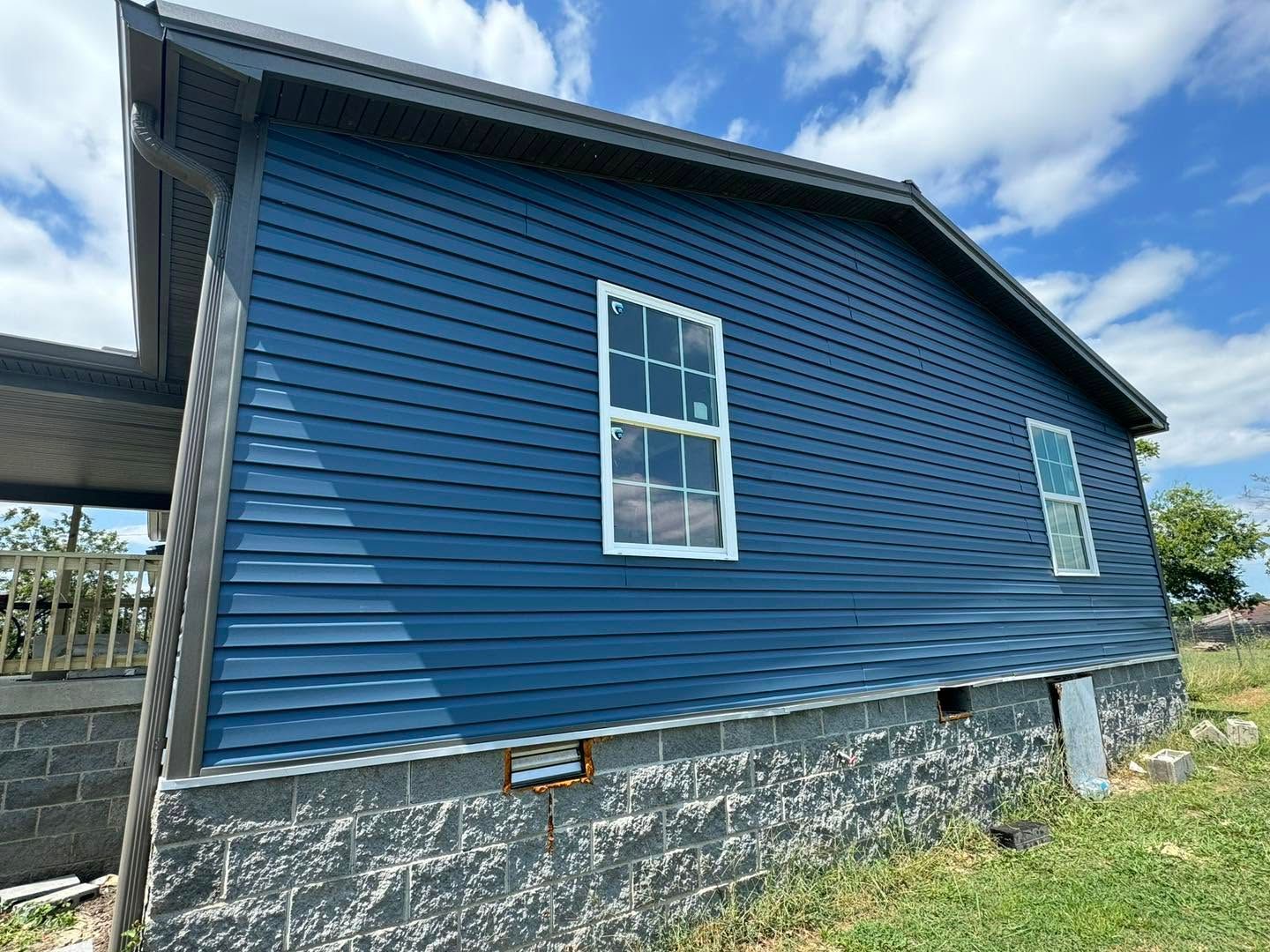
After the finish coats are applied and dry, what you will see is consistent sheen across the siding plane, clean edges at trim and foundation interfaces, and no paint migration onto glass, hardware, or plantings. More importantly, caulked joints and properly primed bare wood mean the new film has mechanical adhesion at every point—which is what prevents the edge-lifting and bubbling that shows up when prep is skipped in favor of getting to the color faster.
Pricing depends on square footage, surface condition, and what prep reveals—particularly whether rotted fascia boards, window sills, or trim sections need replacement before paint can be applied. Those discoveries are documented during the assessment so the estimate reflects the actual scope rather than producing unexpected additions once work is underway.
Common Questions About How Exterior Painting Is Done
Exterior painting involves more preparation decisions than most homeowners expect. The questions below address the process sequence, what affects how long the work takes, and what a properly finished exterior should look like.
How do you know whether hand scraping or power washing is the right prep method?
If paint is actively peeling in large sections, power washing will drive water behind the remaining film and worsen adhesion failure—hand scraping and spot washing is more appropriate in those areas, with full washing reserved for surfaces where the existing paint is still bonded.
Why is caulking part of exterior prep rather than a finishing step?
Caulk applied before primer seals the gaps where moisture enters behind the paint film—if applied after painting, it bonds to the surface layer rather than the substrate and fails faster, leaving the original moisture pathway open.
What happens when the crew finds rotted wood during prep?
Rotted fascia, sill, or trim sections cannot be painted over with any lasting result—the rot continues underneath and the paint film fails within a season. Those sections are documented and addressed as a separate repair item before painting proceeds, which is why an on-site assessment matters more than a phone estimate.
How does the age of a Decatur-area home affect the prep scope?
Wood-sided homes built before the 1990s often have multiple previous paint layers that have accumulated over decades—thick paint buildup at trim details can obscure the profile of the wood and create adhesion problems for new coats, requiring more aggressive scraping and feathering at those edges.
What should you look for to confirm an exterior paint job was done correctly?
Check the caulk lines at window and door trim for full coverage with no gaps, look at wood trim faces for consistent sheen without blotching, and inspect lower edges of siding boards where paint failure typically starts first if primer was skipped.
Rodriguez Roofing & Remodeling LLC also provides exterior painting in Tanner, Flint City, Priceville, Hartselle, and Triana. Call 256-280-1510 to set up a walkthrough of your property's exterior and get a written estimate based on what the surfaces actually require.