Walls That Look Finished, Not Just Painted Over
Interior painting in Decatur for homes and commercial spaces where surface preparation determines how long the finish lasts
Preparation work is what separates a paint job that holds for years from one that starts showing seams and roller marks within months. Rodriguez Roofing & Remodeling LLC handles interior painting for homes and commercial spaces in Decatur and Northern Alabama, beginning every project with a surface assessment that determines what repair and prep work is required before a brush or roller touches the wall. Skipping that step is how contractors cut time on a job while leaving the problem visible to the homeowner within a single season.
The process starts with repairing any wall damage—filling holes, addressing cracks, smoothing imperfections—before masking trim, baseboards, and fixtures. Priming is applied where the surface requires it, whether that means bare drywall, a repaired patch, or a significant color change. Two coats of quality paint follow, with trim work included so the finished product reads as a complete interior rather than walls painted around existing defects. Final cost depends on wall condition and square footage, both of which are assessed on-site rather than estimated over the phone.
Schedule an on-site assessment to review wall conditions and get an accurate estimate for your space.
What the Prep Work Actually Accomplishes
Two coats of paint applied to an unprepared surface will reveal every flaw beneath them once the light hits at an angle. Proper interior prep involves more than wiping down walls—it includes identifying areas where previous patches have shrunk or cracked, checking corners and seams where tape has lifted, and confirming that any moisture-related staining is addressed at the source before being covered. Painting over an active moisture issue produces bubbling and peeling within months, which means the wall has to be opened again anyway.
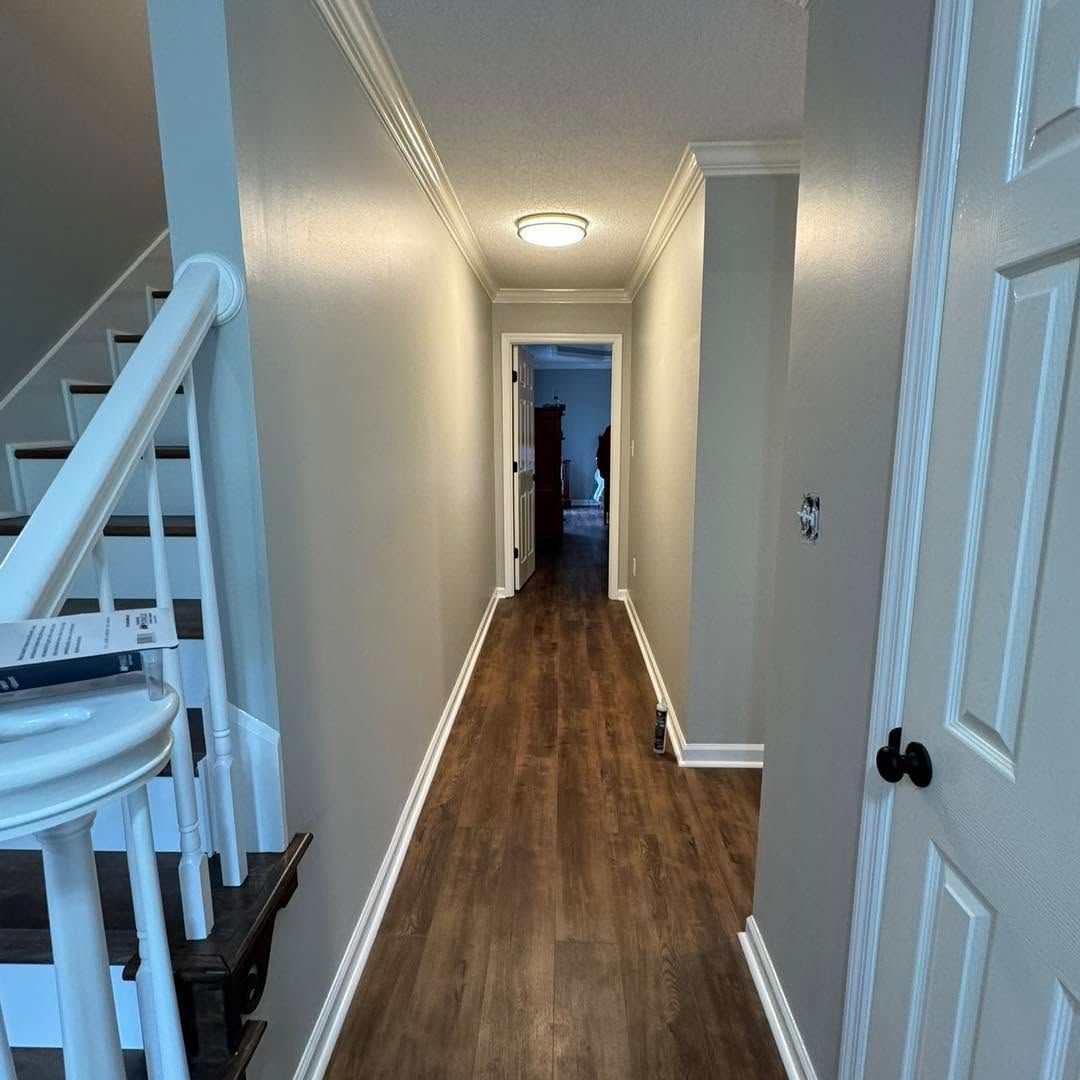
Once the surfaces are properly prepared and two full coats are applied, what you will notice is the absence of lap marks, roller texture inconsistencies, and the blotchy coverage that comes from skipping primer on repaired areas. Trim edges cut cleanly, coverage is even across the full wall plane, and the finish reads uniformly under both natural and artificial light—which is the standard a properly executed interior paint job should meet.
Cleanup is included in the scope of the work, which means no paint-speckled hardware, no tape residue on woodwork, and no overspray on flooring. If wall damage discovered during prep exceeds what surface patching can address—such as a section requiring drywall repair before painting can proceed—that is identified during the on-site assessment so the scope is accurate before work begins.
What Property Owners Ask About the Work
The questions below focus on how interior painting is actually performed—what preparation involves, how decisions are made about priming and patching, and what the finished work should look like.
What surface conditions require priming before the finish coats are applied?
Any repaired patch, bare drywall, or wall transitioning from a dark to a light color requires primer—without it, those areas absorb paint differently than the surrounding surface and show up as uneven sheen or blotchy coverage under direct light.
How is wall damage assessed before painting begins?
The crew checks for settlement cracks along corners and seams, holes from hardware or previous repairs, and any bubbling or staining that indicates moisture has moved through the wall—each type of damage calls for a different patching material and technique before paint is applied.
Why does coverage vary between two rooms painted with the same product?
Texture depth, original wall color, and the porosity of the surface all affect how much paint a wall absorbs per coat—rooms with heavy texture or very dark existing color may need additional prep work to achieve even coverage across the two finish coats.
What should you do before the crew arrives to prepare the space?
Moving furniture away from walls and removing small wall-mounted items speeds up the masking process and reduces the risk of hardware being painted over—the crew handles all masking of trim and fixed fixtures, but clear floor and wall access makes the prep stage more efficient.
How do you check the quality of a finished interior paint job?
Look at the wall from an oblique angle with a single light source—this reveals lap marks, missed spots, and roller stipple that is not visible in flat overhead lighting. Clean trim edges and consistent sheen across the full wall plane are the primary indicators of correct technique.
Rodriguez Roofing & Remodeling LLC also provides interior painting in Tanner, Flint City, Priceville, Hartselle, and Triana. To get an accurate scope and estimate based on your actual wall conditions, contact Rodriguez Roofing & Remodeling LLC at 256-280-1510 to arrange an on-site review.